
Talk To A Human 24/7
800-487-3808
800-487-3808

The kitchen may be considered the heart of the home, but it is filled with safety risks. Especially for those aging at home who may be experiencing a decline in vision, mobility, strength, balance, coordination, or cognitive function. Our goal is to help you to spot the potential dangers and find the best solutions to reduce the risk of injuries. In this article, we will cover the main kitchen safety concerns for seniors, which include fall risks, fire safety, foodborne illnesses, and more. Plus, we’ll guide you in making the best modifications to keep your loved one safe.
Continue reading to learn how to eliminate these common hazards and find the best solution for each.
Know the most common Bathroom Safety Hazards
The kitchen is a high-risk area for slips and falls. Many kitchens have tile floors, which are easy to clean but can become dangerously slick when wet from splashes, spills, or cooking ingredients. Keep reading to learn how to implement these safety precautions.
Don’t forget to evaluate the bedroom for fall hazards.
Everyday items should be organized and stored within reach to avoid having to search, overstretch, rearrange other items, climb, or use a step stool to grab. Keep these items visible, at hip level (especially if they’re heavy), in easy-to-access drawers, or at eye level.

Invest in a comfortable pair of non-skid slippers or non-slip socks that have grips on the bottom. Keep these located somewhere your loved one can grab them quick and slip on first thing in the morning. Most importantly, teach seniors to avoid walking around barefoot or in normal socks. If a surface becomes wet or slick there is no traction and the risk of slipping increases significantly.
As mentioned above, it’s easy for kitchen floors to become slippery when cooking or washing dishes. Here are some tips to follow:
If you rely on a cane or walker, having mobility aids within easy reach reduces the temptation to take unsupported steps. Easy access also helps seniors move more confidently between work areas, maintain stability while standing, and safely respond if they feel unsteady or fatigued during kitchen tasks.
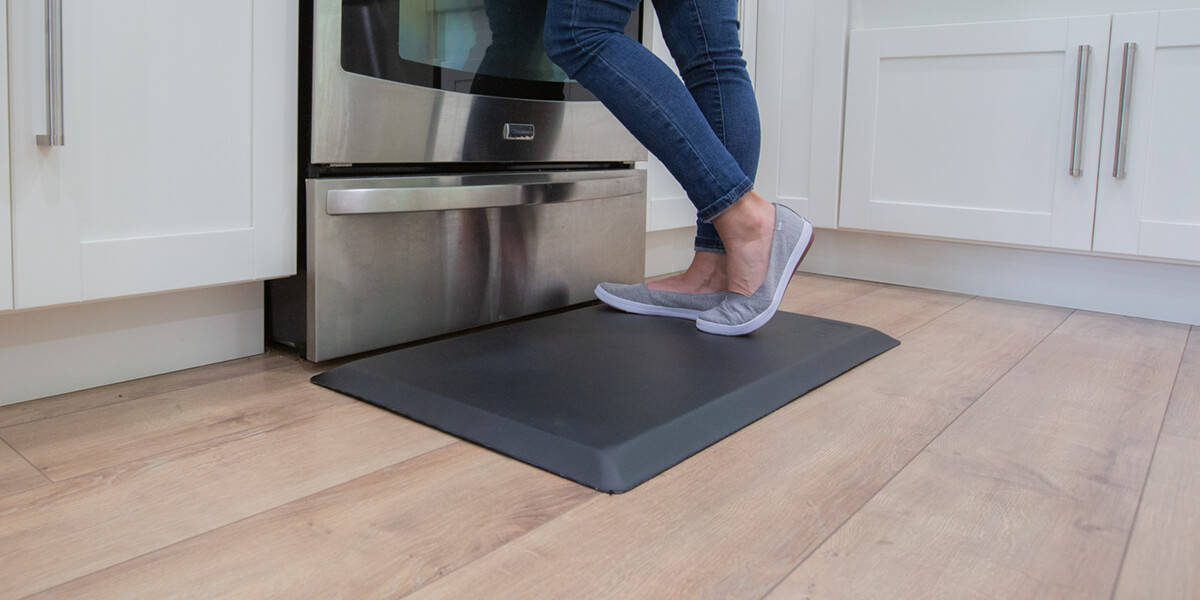
Spending too much time standing can cause fatigue. Using an anti-fatigue mat can help relieve pressure from the back, legs, and feet while standing. Place one of these at the kitchen sink or in front of the stove; just make sure they are non-slip and won’t become slippery when wet. The right mat should have beveled edges to eliminate tripping and be somewhat heavy so that it doesn’t slide around.
Throw rugs are common decorations that should be removed right away. Even when taped to the floor, the edges of the rug pose a threat for catching under your feet. Stick with heavy anti-fatigue mats with beveled edges.
Pets are one of the most common tripping hazards and are responsible for thousands of hospital visits annually. Pets are great company for those who live alone, but weigh the possible risk and decide if it’s the best choice for your loved one.
Learn how to reduce the risk of falls in the bathroom here.
Implement these tips in your kitchen. This is something you’ll want to revisit regularly as a reminder to ensure safety protocols are followed and devices are up to date. Keep reading for more information on each tip we’ve included.
Using timers is a great habit when cooking. These should come preinstalled on stoves and microwaves, but if your loved one has difficulty figuring them out, consider purchasing a basic timer to set on the counter. These timers serve as great reminders that something is cooking in case he or she gets sidetracked.
You can purchase and install an automatic shut-off device or cook stop with a pre-programmed timer and motion sensor. Designed to turn off the stove after the room is vacant for a certain amount of time. These are especially safe for gas ranges.
Dish towels should be kept away from the stove (most importantly, gas ranges), other appliances that heat up, and off the oven handle. As a side note, dish towels can be considered a tripping hazard if they fall from their location to the floor. Ensure they’re hung securely over the countertops instead of over the floor.
Similar to dish towels, potholders, and cooking utensils should be kept away from stove tops and hot areas. These can become hot to the touch and a burn risk. They can also catch fire, melt, and burn.
If there is a window located above or near the stove, remove any curtains that may droop down or hang close to the stove. You should also check around other hot appliances, like the toaster oven, if there is one. These can accidentally catch fire when cooking.
Discuss this regularly. Baggy, oversized, or loose-hanging sleeves are not safe when cooking and reaching over gas burners or hot surfaces. Clothing is highly flammable and greatly increases the risk of starting a fire. Your loved one may need consistent reminders of this.
Dirty ventilation systems commonly cause kitchen fires and should be cleaned regularly. Good, clean ventilation systems will also help eliminate odors, clear smoke and steam, and reduce contamination.
Smoke and carbon monoxide detectors should be inspected and tested regularly. Make sure they are installed and working properly at least once a month. Batteries will likely need to be replaced once, sometimes twice, a year.

Tip:
Teach elderly adults living alone that you should never attempt to heat the home using the stove, oven or a grill. These can cause carbon monoxide poisoning and become deadly.
There should be a fire extinguisher located in the kitchen that is easily accessible. Do not store it near the stove, oven, or other areas where a fire is likely to occur, and block access. Find a place near the kitchen door or entrance that is approximately 30ft away from the stove.
Tip:
Keep in mind that fire extinguishers do not last forever. Disposable extinguishers should be replaced every 12 years, and rechargeable ones should be recharged every 6 years. You can check the label for dates.
In the case of a grease fire, follow these basic safety precautions.
If there is a hood over the oven, make sure that the filters are easily removable and properly cleaning on a regular basis.
Ranges or stoves with controls located at the front are safer. This eliminates the need to reach over hot or ignited surfaces to adjust the burner settings. The microwave should only be used when there is food in it and with microwave-safe containers.
Tip:
Induction cooktops are a safer option. Front-control stovetops eliminate the need to reach over hot surfaces to reach controls, but using knob covers is smart to avoid accidental bumps.
Knives and glass are among the most common causes of cuts and injuries in the kitchen, making them a major safety concern for seniors. Taking proper precautions is essential. When deciding whether knives can be used independently, always consider the individual’s strength, coordination, vision, and cognitive abilities to reduce the risk of serious injury.
Foodborne illnesses can wreak havoc on anyone, but especially someone with a compromised immune system. Take the necessary precautions to ensure food is properly stored and your loved one is safe from consuming contaminated food. Here’s what you can do.
To avoid cross-contamination, ensure food is properly stored in the refrigerator, freezer, and pantry. Frequently check both the refrigerator and freezer temperature; appliance settings can easily be bumped and changed without knowing.
Keep the fridge set at 40°F (4°C) or below and the freezer at 0°F (-18°C)
When storing leftovers or premade meals, use airtight containers to preserve them longer.
Sometimes expiration dates are hard to read or rub away. Labeling food with the expiration dates in a large, easy-to-read space so it is more noticeable can help prevent the consumption of unsafe food. Check expiration dates on the packaging routinely and discard spoiled items.
Tip:
For a general rule of thumb, leftovers are good for about 3 to 4 days. When in doubt, throw it out.
Cooked food should be discarded if left out at room temperature for longer than 2 hours. Bacteria can grow rapidly between 40 and 140°F, making food unsafe to eat.
There are multiple ways to avoid food contamination. Make sure to practice good hygiene and keep cooking and food prep areas clean by washing hands and sanitizing.
Bacteria and germs are easily spread from hands to food, utensils, cutting boards, and countertops. Proper hand washing is the most effective way to prevent foodborne illness and cross-contamination. Be sure to always wash your hands after handling raw meat, eggs, seafood, or unwashed produce.
Make sure countertops are cleaned regularly, especially after handling raw meat, eggs, seafood, and unwashed produce. Bacteria can spread quickly onto hands, utensils, and other food products without even realizing it. Wipe up spills right away and use a sanitizer to kill germs and bacteria.
Tip:
High-risk foods for older adults include deli meats, unpasteurized dairy, undercooked eggs/meat, and raw sprouts
Following these safety protocols adds an extra layer of protection against harmful accidents. You may find that certain cleaners, chemicals, or medications need to be put away and administered by caretakers.
Decluttering is one of the best things you can do to improve kitchen safety, decreasing the likelihood of cuts, injuries, falls, and accidents, such as spills or broken items. Here are a few tips you can implement.
Learn ways to declutter in the bedroom for more independence and safety
Make sure there is enough space for your loved one to navigate around the kitchen and access all cooking, eating, and storage areas. Clear open pathways for mobility aids. Check that the ground is free of loose throw rugs and tripping hazards. Utilize non-slip, beveled, anti-fatigue mats that can be easily maneuvered. We recommend that you test-run this yourself to make sure.
Relocate unnecessary decor and put away any unused appliances. There should be ample countertop space for prepping meals. Make sure mail, newspapers, and magazines don’t pile up. These items can turn into fire or slipping hazards.
Since it is often necessary to take medication with food, the kitchen is a common place to store daily medications. Multiple bottles take up space, create clutter, and can easily be knocked over. Caregivers should organize medication into pill organizers and store bottles out of the way. These handy storage containers also serve as a reminder to take medications and avoid double-dosing.
Items should be organized based on prioritization. Things that are accessed frequently should be conveniently located and easily accessible. Use labeled bins and baskets to group related items, making it easier for your loved one to find what he or she needs. Poorly organized storage areas are not only frustrating to navigate; having to bend, twist, and reach to rummage or move items around increases the risk of injury.
Both bending down too low and reaching too high can cause injury, especially when heavy items are involved. Keep crockpots, mixers, larger cookware, and other heavier gadgets stored at hip level. This eliminates the need to bend down too low or use step stools to collect items.
Creating areas for essentials, such as a coffee station, medication area, or meal prep space, reduces unnecessary walking, reaching, and searching other areas of the kitchen for items. This can lead to overexertion, loss of balance, or spills. Having a consistent setup will support those with limited mobility and memory changes, making daily routines simpler, more efficient, and less risky.
Improve visibility where it matters the most by adding bright overhead and under-cabinet lighting. Better lighting helps seniors spot spills, clutter, and trip hazards sooner, and makes it easier to read labels, measure ingredients, and use appliances safely.
Smaller cookware is easier to store, use, and maneuver. Get rid of big, bulky items and downsize pots, pans, and cooking sheets for easier access and use.
Kitchen shears, knives, and other sharp cooking utensils should be stored properly. Use mounts, blocks, or docks and avoid storing these items loosely in a drawer where your loved one may accidentally cut or injure themselves.

Routinely inspect all major appliances to ensure proper functioning and user-friendliness. Poor functioning, broken, or leaking appliances can lead to fires, water damage, foodborne illness, injuries, and other major safety concerns.
Both gas and electric stovetops need to be cleaned regularly to avoid grease fires or damage to appliances.
Many tools and gadgets on the market help make daily kitchen activities easier for those with disabilities, limited mobility, or strength. These are some of the most helpful.
Replace ceramic, glass, or breakable dishware with plastic or melamine dinnerware and cups. Instead of glass bakeware, opt for metal pans. If items are dropped, they’re less likely to break. Shattered glass is difficult to clean up and increases the risk of your loved one injuring themselves.
While step stools can be considered a risk for falls, sometimes they are necessary. Find a step stool that has one level with a stable base and a handle. This type of stool is safer than fold-out or multi-level designs.

A reacher grabber is a handy gadget to have. Whether you need to take an item off the top shelf or reach behind an appliance. This tool gives you the extended reach you need so you don’t have to bend down or overreach.

These utensils help stabilize hand and arm movements if your loved one experiences frequent tremors or shakes when they are trying to eat. Those with conditions like arthritis or carpal tunnel can also benefit from using adaptive utensils or customizable grips that are easier to hold.
Try this universal utensil holder with an easy and comfortable grip.

If your loved one’s strength and coordination is affected by a disability, bibs are a great idea for protecting clothing. Reusable ones are much more comfortable and can be simply tossed in the wash for next use.
Spill-proof cups, plates, and bowls for adults cut down on mess and help avoid spilling liquids onto the floor, which can make surfaces slippery and dangerous. Those with disabilities, or conditions like Parkinson’s, can really benefit from these cups and feel more independent.
A plate guard easily attaches to standard dishes, creating a raised edge that keeps food from sliding off the plate, making it easier to scoop meals with a utensil. This added support improves independence and reduces frustration for individuals with limited hand control, weakness, or coordination challenges.
Opening jars and cans can be tough if you suffer from Arthritis, Carpal Tunnel, or decreased strength. Look for an ergonomically designed opener with an easy-to-grip handle and good leverage. You may also want to consider electric openers, but be sure this is an appropriate option for your loved one.
With reduced hand function regular peels are difficult to grip. A palm peeler rests comfortably inside your hand without the use of dexterity or finger strength. Simply run the device over fruits and vegetables for an easy-peel.
As we age, our vision tends to decrease. Keeping a magnifying glass handy in the kitchen is super convenient for reading labels and expiration dates. It’s also great for reading the newspaper with your morning coffee.
As mentioned in our fire safety section, timers are a great tool when cooking or baking and are great reminders in case your loved one becomes sidetracked.
If it’s difficult for your loved one to bend down to access the oven, consider a toaster oven that sits on the counter top. Just remember your fire safety and get one that has an auto shut off feature.
If you’re planning to remodel, these are some of the most important things to address. Keep reading to learn more considerations when planning your renovations.
It may be difficult to adjust the layout of your kitchen if you’re not planning to make upgrades, remodel, or relocate, but if you are, keep in mind maneuverability and access to high-traffic areas.
Here are some things to think about when choosing new countertops.
If your loved one is wheelchair bound or used their mobility scooter to navigate around the house and perform daily tasks, installing lower countertops will provide a more comfortable work space for preparing meals
Opt for rounded edges to reduce the risk of serious injury in case your loved one bumps their hip or even head when maneuvering around the kitchen.
Quartz and granite countertops are easiest to clean and maintain, they are also durable and long lasting.
Easily accessible cabinets make all the difference and reduce the risk of injury by eliminating the need to overreach, bend down, and search for items. Consider these features when upgrading your cabinets.
If your loved one is wheelchair bound you’ll definitely want to lower cabinet height. However, lowering cabinet height in any senior’s kitchen will make it easier to access items and eliminate the need for step stools or additional gadgets. Having more accessible areas to store dishes, drinkware and other kitchen items will allow you to have a more organized space with less clutter.
Drawers that pull or slide out make it a lot easier to access items located in the back.
If built in slide-out drawers are a little outside your budget. Opt for baskets and organizers that function the same way
D-shaped handles are easier to grip and pull than small knobs.
Installing shelves into corner cabinets that function as lazy susans is a great way to maximize space and improve accessibility. Smaller, plastic versions are also great for organizing spices and pantry items.
Efficient lighting is important, especially as we age and vision decreases. A well lit kitchen makes it easier to locate items, identity important labels and expiration dates, and navigate surroundings. Here are ways to enhance lighting in the kitchen.
Upgrade old bulbs. Opt for white LED lights that provide ample lighting and are both energy efficient and long lasting.
Both motion and sensor nightlights are a great addition to any kitchen. These are perfect for lighting up the path to the kitchen or countertops in case your loved one decides to grab a late-night snack or drink of water.
Cabinet lighting that illuminates when a cabinet door is opened can help your loved one identify and locate items more easily. Under cabinet lighting is also a great idea to better light up countertops and workspace.
Replace pole style light switches with rocker switches. These are much easier for those with decreased dexterity or conditions like arthritis to use.
Get remodeling tips for bedroom safety here.
There are several safety precautions that can be implemented when it comes to the kitchen and every scenario is unique depending on the level of independence, existing conditions, and physical capabilities. Check out these other factors you may want to consider for your loved one.
If Dementia or memory issues are part of the dynamic, incorporate the tools we previously mentioned, such as automatic shut-off devices and knob covers. Wandering may be common, and your loved one may easily lose track of tasks. Keep the layout simple, avoid clutter on the countertops, and consider supervised cooking only. Keep reading to learn how hiring caregivers and using medical alert devices can provide some peace of mind.
Cognitive safety is also important for bathroom safety and independence.
There are benefits to hiring a caregiver. Not only can they provide a safe environment for your loved one, but provide companionship for those aging at home alone, oversee daily activities, keep a watchful eye over your loved one’s condition, and alert you of any red flags. If a personal caregiver isn’t in the budget, consider electing a family member.
Consider giving your loved one an emergency call button to wear around their neck. Smart watches are also equipped with emergency features. Teach them how to use the device. In the case of an accident, slip, or fall, the button will be easy to access when a phone may be out of reach. Medical alert devices are great for remote monitoring and provide some peace of mind knowing that if something happens, you or emergency responders will be alerted.
Medications are not uncommon for aging adults. Make sure to educate yourself on the possible side effects of prescribed medications and be on the lookout for any red flags. These may include symptoms like fatigue, dizziness, blurry vision, and many more that can inhibit the ability to cook or perform other kitchen tasks safely. If you ever notice side effects, speak with the doctor right away and temporarily keep your loved one out of the kitchen until sorted out.
If you don’t feel comfortable allowing your loved one to cook or if they are simply not able, consider ordering a meal service. There are a variety of options available to fit any diet, and meals can be delivered on a regular basis. Most can simply be heated in the microwave. With a meal plan, you’ll know the exact nutrition your loved one is receiving and won't have to worry about missed meals or dangerous cooking situations.
Keep a list of emergency contacts by the phone or an easily accessed and visible location (i.e. the refrigerator door), and they should be programmed into smart phones Be sure to include the following:
As technology advances, smart home hubs are growing in popularity. These voice activated personal assistants can keep your home connected, safe and secure with the ability to make calls, play music, adjust the thermostat, set reminders or timers, search the web, and most importantly function as a security or emergency alert system. There may be a slight learning curve but if your aging parent is capable, both parties will benefit from setting up a smart home system.
Download this free printable Kitchen Safety Checklist here.
☐ Keep frequently used items within easy reach (waist–shoulder height)
☐ Wear non-slip shoes or socks; avoid barefoot or slippery socks
☐ Clean up spills immediately
☐ Repair uneven flooring, loose boards, or raised thresholds
☐ Use non-slip, beveled-edge anti-fatigue mats at sink and stove
☐ Remove throw rugs
☐ Keep walking aids (cane, walker) nearby
☐ Keep walkways clear of clutter, cords, and pet items
☐ Use cooking timers for all stovetop and oven use
☐ Never leave cooking unattended
☐ Install automatic stove shut-off devices if needed
☐ Keep dish towels, potholders, and utensils away from heat
☐ Remove curtains or window treatments near heat sources
☐ Wear fitted clothing; avoid loose or long sleeves when cooking
☐ Clean stove hoods, vents, and filters regularly
☐ Test smoke and carbon monoxide detectors monthly
☐ Keep a fire extinguisher accessible (away from the stove)
☐ Know grease fire safety: never use water, cover with a lid, use an extinguisher
☐ Store knives and sharp tools in blocks, mounts, or organizers
☐ Use cut-resistant gloves when prepping food
☐ Use stable, non-slip cutting boards
☐ Avoid carrying knives around the kitchen
☐ Dispose of broken glass safely and immediately
☐ Ensure prep areas are well-lit
☐ Keep refrigerator at 40°F (4°C) or below
☐ Keep freezer at 0°F (-18°C)
☐ Store leftovers in airtight containers
☐ Label food with expiration or prep dates
☐ Discard leftovers after 3–4 days
☐ Avoid leaving cooked food out longer than 2 hours
☐ Practice proper hand washing before and after food prep
☐ Avoid cross-contamination (separate raw meats, sanitize surfaces)
☐ Clean and sanitize countertops after handling raw foods
☐ When in doubt, throw it out
☐ Store cleaners and chemicals away from food
☐ Never mix bleach and ammonia
☐ Use large-print labels on chemicals and medications
☐ Check expiration dates on medications and supplements
☐ Keep alcohol-based cleaners away from heat sources
☐ Remove clutter from counters and walkways
☐ Create clear paths for walking aids or wheelchairs
☐ Store heavy items at hip level
☐ Designate zones for frequently used items (coffee, meds, prep)
☐ Use pull-out shelves, slide-out drawers, or lazy Susans
☐ Downsize cookware to lighter, easier-to-handle options
☐ Use plastic or melamine dishware instead of glass
☐ Store medications neatly in organizers, not loose bottles
☐ Install bright overhead lighting
☐ Add under-cabinet task lighting
☐ Use motion-sensor or night lighting for nighttime access
☐ Replace pole switches with rocker-style switches
☐ Clean stovetops regularly to prevent grease fires
☐ Ensure burners and grates are clean and functioning
☐ Clean oven every 6 months
☐ Check refrigerator seals and temperatures
☐ Replace water filters as recommended
☐ Never run microwave empty; use microwave-safe containers
☐ Label appliance controls if needed
☐ Use reacher grabbers instead of climbing or overstretching
☐ Choose stable, single-step stools with handles (if needed)
☐ Use weighted or adaptive utensils for grip support
☐ Use spill-proof cups, plates, and plate guards
☐ Keep magnifying glass handy for labels and instructions
☐ Use timers and reminder devices
☐ Monitor medication side effects (dizziness, fatigue, confusion)
☐ Consider caregiver support if cooking safety is a concern
☐ Use medical alert devices or smart home assistants
☐ Post emergency contacts visibly (911, Poison Control, ICE)
☐ Consider meal delivery services if cooking is unsafe
Without a doubt, it takes a lot of work to optimize for kitchen safety but the payoff is huge. Taking the extra steps and knowing that your loved one is set up for safety will give you peace of mind while allowing him or her to live more independently. Take this guide and evaluate your current situation then implement the changes we have discussed. You can also download and print this free safety checklist.
Leave a comment